
Champaign, Illinois
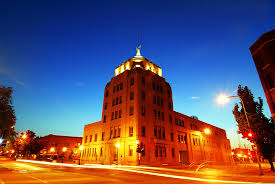 In 1822, the first settlers came through the tall prairie grasses. Runnel and Mary Fielder followed a Native American trail to the area and built a cabin in a grove of trees that would become the first settlement. They were joined by others, like the Busey family, who farmed the rich land by the trees in an area which they would call Big Grove.
The pioneers worked hard to raise crops, make their own clothing and raise livestock. They endured many hardships, like prairie fires, floods, and disease from mosquitoes that lived on the swampy lands. Still, they helped each other raise cabins and barns, had picnics together, and celebrated life with fiddle music and dancing.
As Big Grove got bigger, some of the settlers decided that they wanted to form their own county. This would save them long trips to Danville, which was the current county seat. State Senator Vance agreed with the settlers and Champaign County was formed, named after Champaign County, Ohio, where Senator Vance grew up. A place was picked for the county seat, and it was named Urbana, after the senator’s hometown in Ohio.
The settlers celebrated the formation of their new town in a ceremony on July 4, 1833. Urbana would soon have a store, a jail (which they called the Calaboose; see the drawing of it below) and a courthouse, and then a blacksmith shop, a schoolhouse, and its own newspaper.
Though Urbana grew, there was something slowing it down. The farmers in Urbana had to travel too far to sell their produce to other towns, and the roads were bad, sometimes too muddy to travel at all. That is why everyone in Urbana was excited when they learned that the railroad was coming their way. It would run from Chicago to Mobile, Alabama and would pass right through Urbana, or at least that is what the people of Urbana thought.
The railroad, after studying the land, decided to run the railroad tracks two miles west of Urbana, instead. The land was flatter there, they said. The people of Urbana were upset, and some suggested that they move their homes to the railroad tracks. The land there was swampy, though, and the settlers decided to keep the town where it was.
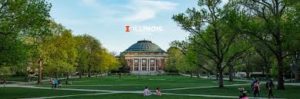 The area around the tracks began to be settled by others. In 1854, a train depot was built, then a steam mill, stores, a church, and a post office. The little town that began to grow was named West Urbana, after the name given to the post office there. West Urbana grew like wildfire, until it was much bigger than Urbana. In 1861 they voted to make their town into a city, and to name it Champaign.
This worried the people of Urbana. What if the city of Champaign tried to take over the county seat? Urbana, to assure that this would not happen, tore down its ten year old courthouse, and built another one so big and fancy they would be sure to keep the county seat!
Both cities grew, with a mile and a half of open land between them. Planks had been laid to make a road across the swampy land and a horse drawn streetcar took people back and forth between the cities. It wouldn’t be long, though, before something important would fill this land.
It began when a reverend from Champaign decided to build training school for ministers there. After finishing one huge five-story building, though, the Civil War interrupted their work, and the school was never finished. The huge building, which was nicknamed the Elephant, sat empty for a time, until another idea came along for its use.
Ice Cream WagonThe people of Champaign-Urbana learned that the state of Illinois was looking for a place to build the downstate branch of a college to teach agriculture. They decided that the area between the towns would be just right for a college. The people elected Clark Griggs to the State Legislature, his main task to convince the government to select Champaign-Urbana as the site for this college. It was lucky when Mr. Griggs was named the head of the committee that selected the city for this branch! He was able to convince the committee to select Champaign-Urbana over the many other cities who wanted the college.
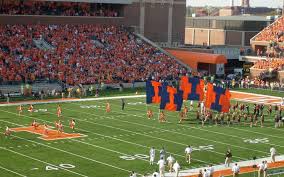 The new college was called Illinois Industrial University, and it opened in 1868 with 77 students. They lived in and took classes in the Elephant building, which the University named Old Main Hall. The University added many subjects to those it taught. It would later change its name to the University of Illinois and would grow to become one of the best universities in the nation.
It began when a reverend from Champaign decided to build training school for ministers there. After finishing one huge five-story building, though, the Civil War interrupted their work, and the school was never finished. The huge building, which was nicknamed the Elephant, sat empty for a time, until another idea came along for its use.
Ice Cream WagonThe people of Champaign-Urbana learned that the state of Illinois was looking for a place to build the downstate branch of a college to teach agriculture. They decided that the area between the towns would be just right for a college. The people elected Clark Griggs to the State Legislature, his main task to convince the government to select Champaign-Urbana as the site for this college. It was lucky when Mr. Griggs was named the head of the committee that selected the city for this branch! He was able to convince the committee to select Champaign-Urbana over the many other cities who wanted the college.
The new college was called Illinois Industrial University, and it opened in 1868 with 77 students. They lived in and took classes in the Elephant building, which the University named Old Main Hall. The University added many subjects to those it taught. It would later change its name to the University of Illinois and would grow to become one of the best universities in the nation.
VIEW POST